MU Art Collection
The Memorial Union collection is largely comprised of work that was generously donated to the Memorial Union through the years, often either by the artist or by surviving members of their family.
Of special note is the work collected and donated by the late Gordon Gilkey, who was prominent in government art efforts during and after World War II. He made the acquaintance of many artists active in Europe during that time, and received art from them through the years, largely hand-pulled prints.
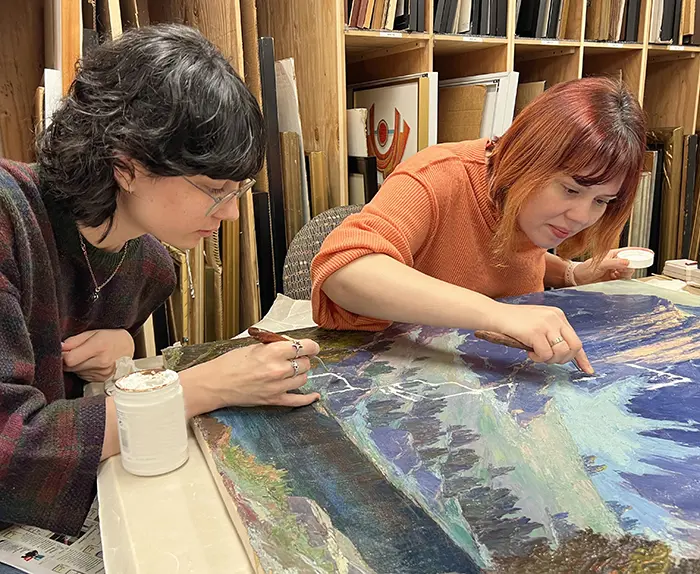
The collection was also the lucky recipient of a large donation of paintings by the late William Price, and is one of only a couple of institutions to house a number of his paintings. These paintings have been beloved for decades by students, staff, and visitors to the MU Lounge. In addition to being beautiful, they also afford students an opportunity to learn restoration and conservation techniques and schools of thought. As the paintings have been on display for many, many years, they need occasional restoration efforts due to normal wear and time, as well as the occasional mishap.
Though other paintings have been recipients of TLC from decades of students and staff, of late the majority have been the Price Paintings, in part due to the number of paintings by him that make up the collection.
Artwork from the collection is featured throughout the Memorial Union and the Student Experience Center. In addition to public spaces, organizations and staff with offices in either the MU or the SEC can request to see available paintings that can then be hung in their office by the Art Team.
Happening Now in the Workshop
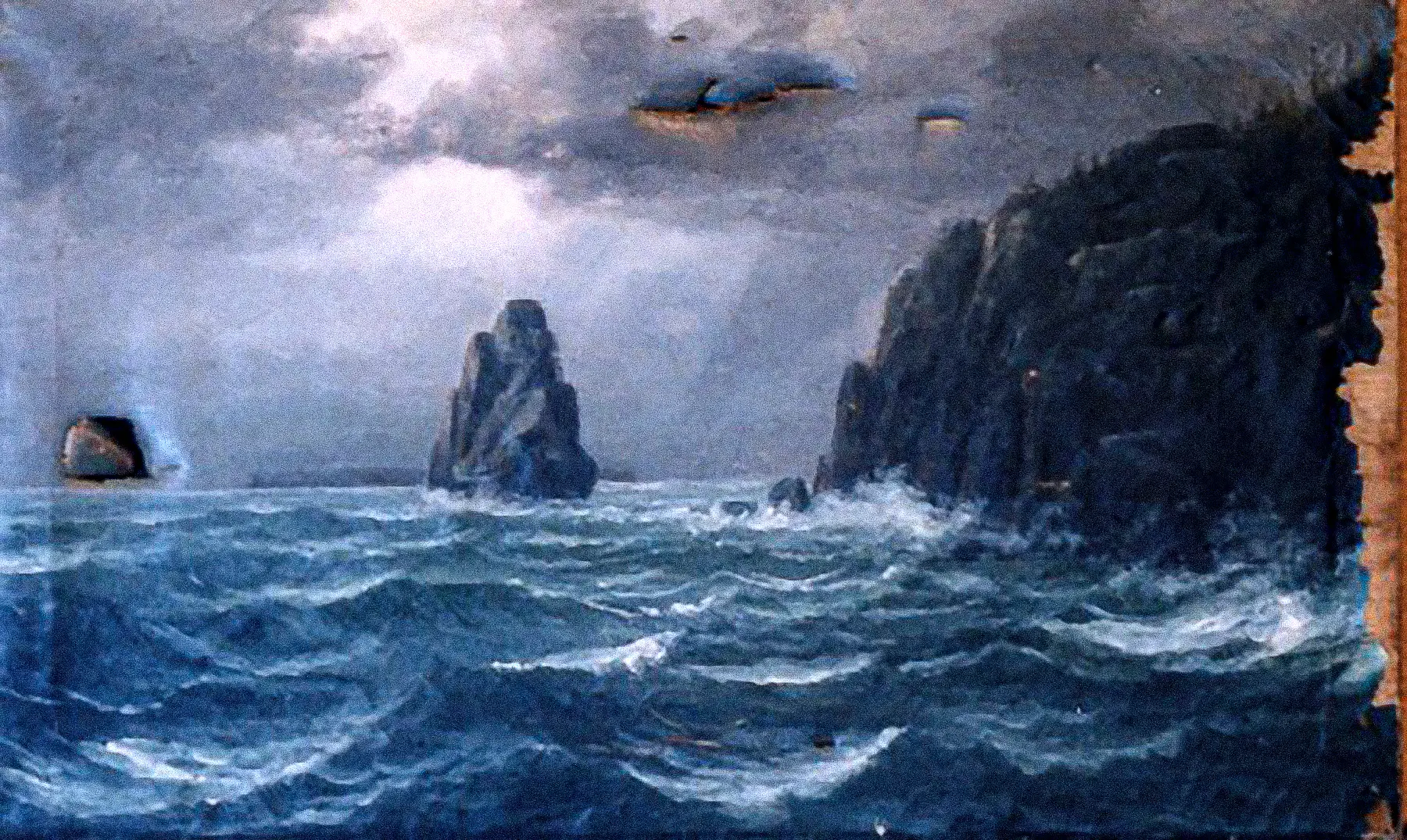
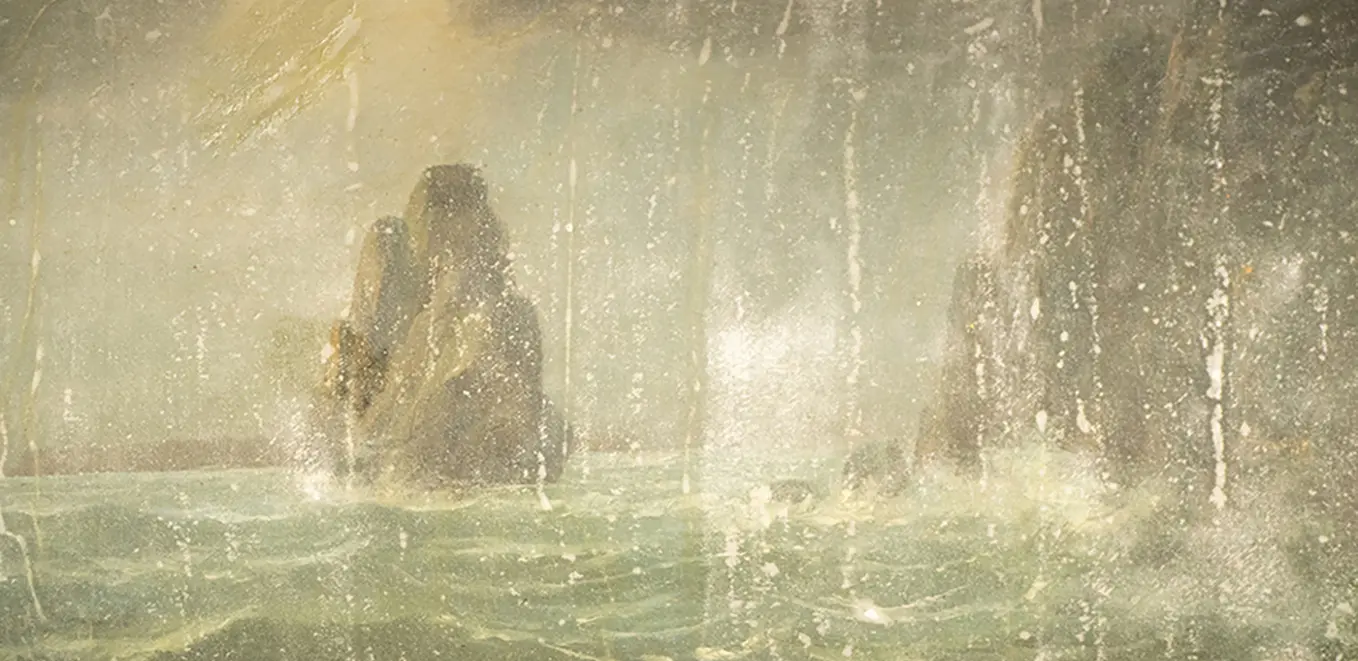
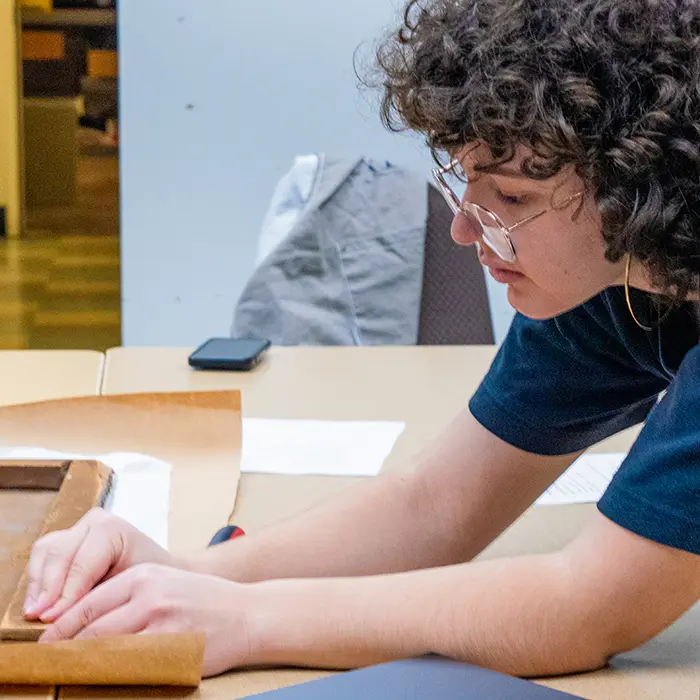
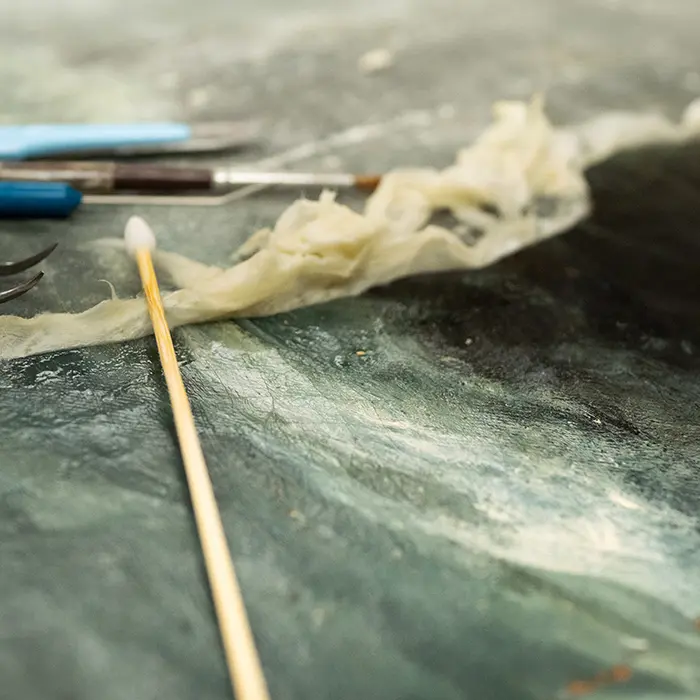
This turn-of-the-20th century painting, Refuge Cove, by Maurice Ball, has been in storage for an unknown period of time due to its delicacy and heavy damage. The paint was cracking and flaking. We couldn't work on it without causing more damage unless we used a removable facing. So far we have:
- Faced the front of the painting with Japanese kozo paper using water-soluble fish glue.
- Removed the canvas from its supports.
- Cleaned 100 years of built-up grime and who knows what else off the back.
- Applied a special restoration polymer adhesive through the back to restick the flaking paint to the canvas surface.
- Carefully removed both the kozo paper and the fish glue from the front of the painting using swabs and water to dissolve both.
Next we deal with the rips in the canvas!
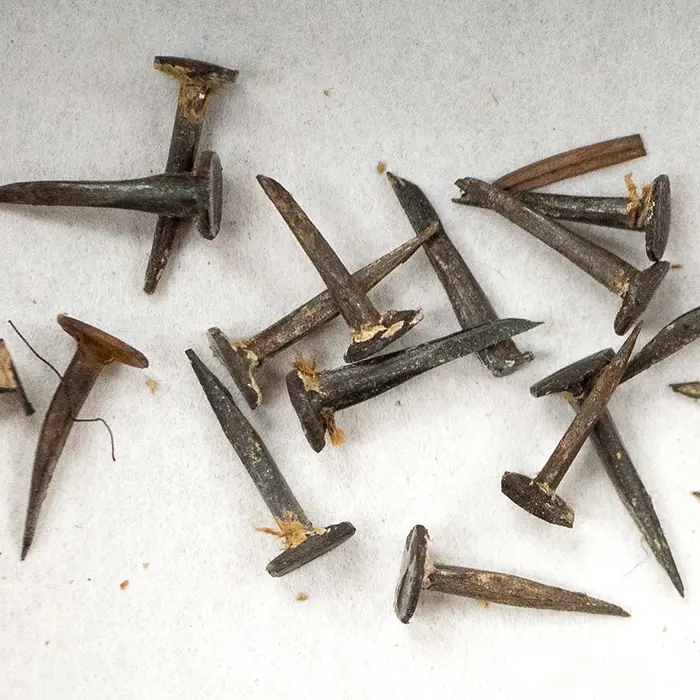
Previous Restorations
During the Cleaning Process

Hanging up the Finished Painting
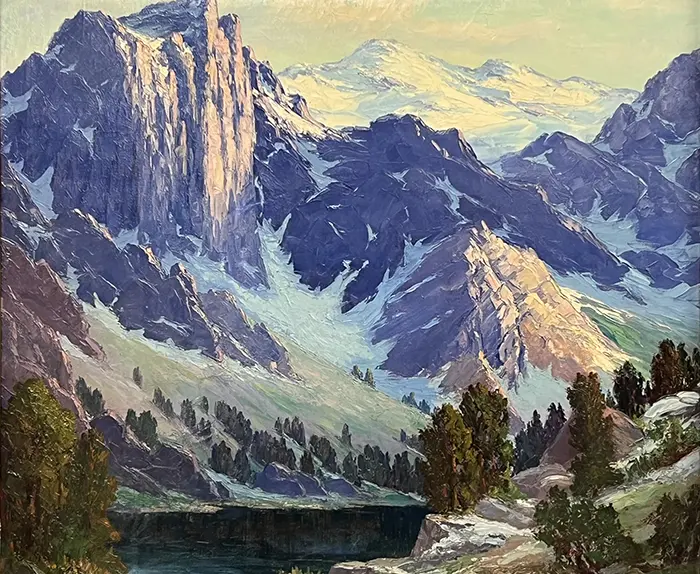
Our most recent project was one of the William Price paintings usually featured in the Memorial Union Lounge. Years of old varnish, smoke, and dust had built up on the painting. The team:
- Evaluated the painting to make sure it was stable, and it was despite the cracking expected of a painting in this age.
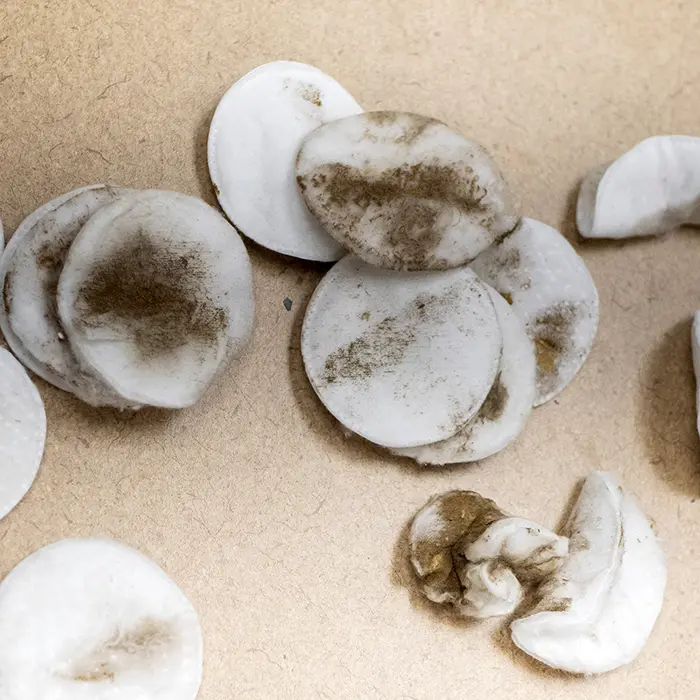
- Used solvents, cotton swabs, and patience to clear the dirt and old yellowed varnish.
- Applied a restoration polymer UV protectant varnish.
- Spruced up the historic frame.
- Hung up the painting and patted ourselves on the back for another job well done!
- Picked out our next yellowed, dirty victim :)
As tends to happen, the rehanging wasn't as smooth as we'd hoped. One of the screws holding the wire on back popped out. But we came prepared and fixed it right up!
Another Recent Project
Accidents happen, sometimes big ones. Unfortunately, a painting got into a fight with some scaffolding, and lost, resulting in some drastic tearing. Fortunately, the MU Art Team was able to repair it. During the process, we did the following:
- Removed the varnish from the painting.
- Relined the painting to another canvas, which also helped stabilize some paint that was starting to lose its adhesion to the canvas (which is called "consolidation").
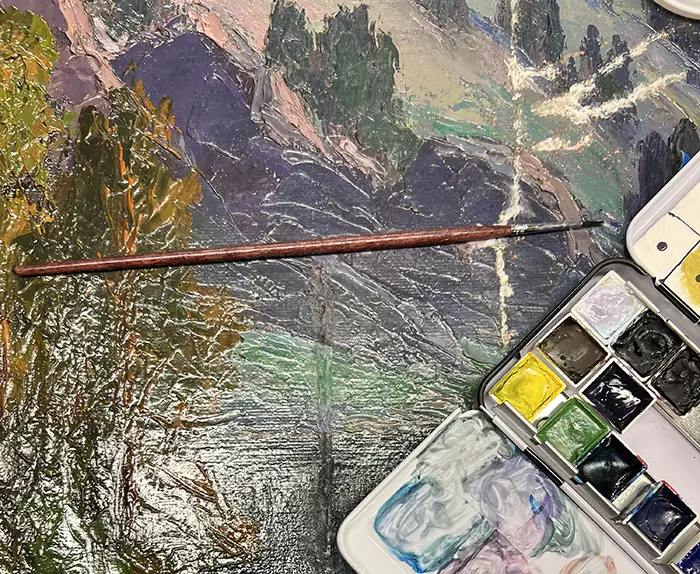
- Used putty to make the texture of the ripped areas better match the surrounding areas.
- In-painted with Gamblin Conservation Paints to make it less noticeable, matching colors through mixing and layering.
- Re-varnished the painting with a modern varnish designed for restoration work.
Everything that was done is reversible, which is an important part of restoration/conservation.